Plan any Pilates class in ten minutes.
You already know the exercises. This is the part nobody taught you: how to put them in an order that works, every single time.
52 lessons · 50 ready-made class plans · Yours to keep · Normally $197
Sunday night. A blank page. Five classes to plan.
If you’re teaching every week, at least one of these is true right now.
- You spend an hour or more planning a single class — and start from scratch again next week
- You’ve stood in front of a full room and forgotten what comes next, everyone waiting while you cover
- Your clients keep getting variations of the same class, because you reach for what you know works
- The exercises work, but the transitions between them still feel awkward or improvised
- You teach someone else’s sequence because it’s safe — and you’re not sure you could build one yourself
- You know too much to fit in fifty minutes, and you can’t decide what to cut
None of this means you’re a weak instructor. It means you were trained to know exercises and never trained to build a class.
Your problem isn’t the repertoire.
Think about the last class you planned. How much of that time went into choosing exercises, and how much went into deciding what order they go in, when the springs change, and how you get from one to the next?
That second part is what turns a list of exercises into a class. Yet in most teacher-training programs it gets far less attention than the repertoire itself.
They have a repeatable framework: a clear class structure, a logical order for moving the body, fewer unnecessary spring changes, and a cueing sequence they don’t rebuild each time. When they sit down to plan, the framework is already there — they only choose the focus and the exercises that support it.
That’s not talent. It’s a system. This course is that system, written down.
Same knowledge. Different Sunday.
Six modules. Fifty-two lessons.
Six to eight minutes each. Watch it through in a weekend, or take one module at a time.
Workout Structure
The shape every class holds — what the warm-up, main body and cool-down are physiologically for, and why the container stays fixed while the content changes.
You leave with your own permanent class structure, written once.
Exercise Selection
Six ways to decide what goes in: body focus, equipment focus, client focus, theme focus, progression focus, and the mixed method — plus how to pick between them.
You stop choosing exercises at random and start choosing them for a reason.
The Classical Method
How to plan with the classical repertoire while preserving its logic, balance and progression. How the 34 classical mat exercises fit together, how to avoid overloading one position, and how to build a complete workout step by step.
You can build a balanced classical mat workout without second-guessing every choice.
The Modern Method
The same planning discipline with more room to adapt. When a variation supports the goal, how to create one that still makes sense, and how to keep creativity from turning into randomness.
You build your own variations instead of borrowing someone else’s.
Creating Flow
The heart of the course. Four principles — position continuity, spring logic, breathing space and energy arc — plus the most common flow breakers and a simple process for repairing a class that feels choppy.
This is the module that fixes your transitions.
Teaching & Cueing
A six-step structure for every exercise you teach: name it, set the position, explain the movement, count and cue, correct, transition. Plus counting rules and the cueing mistakes almost everyone makes.
Your instruction sounds the same in your seventh class as in your first.
Summary & Final Project
You build a complete class from scratch using the method — classical or modern, your choice.
And fifty finished class plans.
Every plan shows the method already applied: spring settings and exercises in teaching order, formatted to follow while you teach — not a document you need to study first.
Use one as it is on a week you have nothing left. Or take it apart and watch where each rule shows up, which is how most people end up learning the method fastest.
- Footwork Series
- Carriage Seated Row
- Side Splits
- Short Box
- Lunge × Scooter
Spring notation includes alternates for different reformer brands.
Four things. One payment.
52 video lessons
Six modules covering structure, selection, classical, modern, flow and cueing.
$197The Class Plan Library
Fifty complete plans with spring settings, ready to teach.
$97The course workbook
Where you write the four decisions you’ll never make again.
$47Planning templates
Fill-in frameworks for both the classical 34 and the modern build.
$47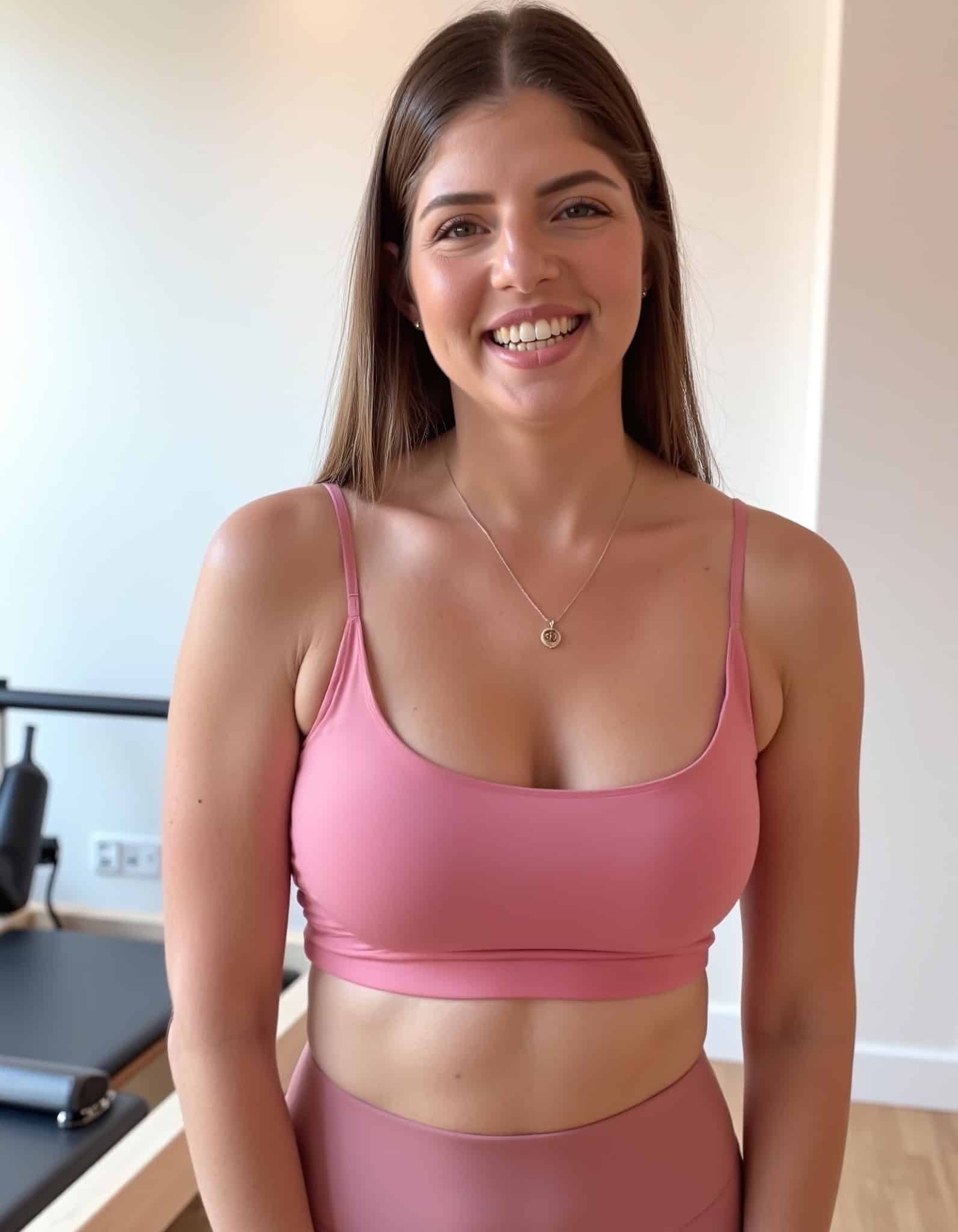
The same message, over and over.
I’m Chen Leibovich, founder of Go Pilates Academy. After earning 42 professional certifications, running two studios in Tel Aviv and training more than 700 instructors across 30 countries, I kept seeing the same gap.
It arrived from graduates constantly — people who could name every exercise and explain every muscle, sitting on Sunday night with a blank page. It was never a knowledge problem. Nobody had given them a structure, so they rebuilt one from nothing every week.
So I turned the planning system I’d been using for years into a clear, repeatable method. That’s this course.
Get The Pilates Planning Method™
One payment · Lifetime access · Price returns to $197 next week
Get instant access — $35Access opens the moment you check out.
Questions people ask.
Is this mat or reformer?
I’ve been teaching for years. Is this too basic?
Won’t a fixed structure make all my classes the same?
How long will it take me?
Is this a certification?
Does it count for CECs?
What if it’s not for me?
You have another class to plan this week either way.
Normally $197 · 14-day refund · Lifetime access
Go Pilates Academy · The Pilates Academy LLC